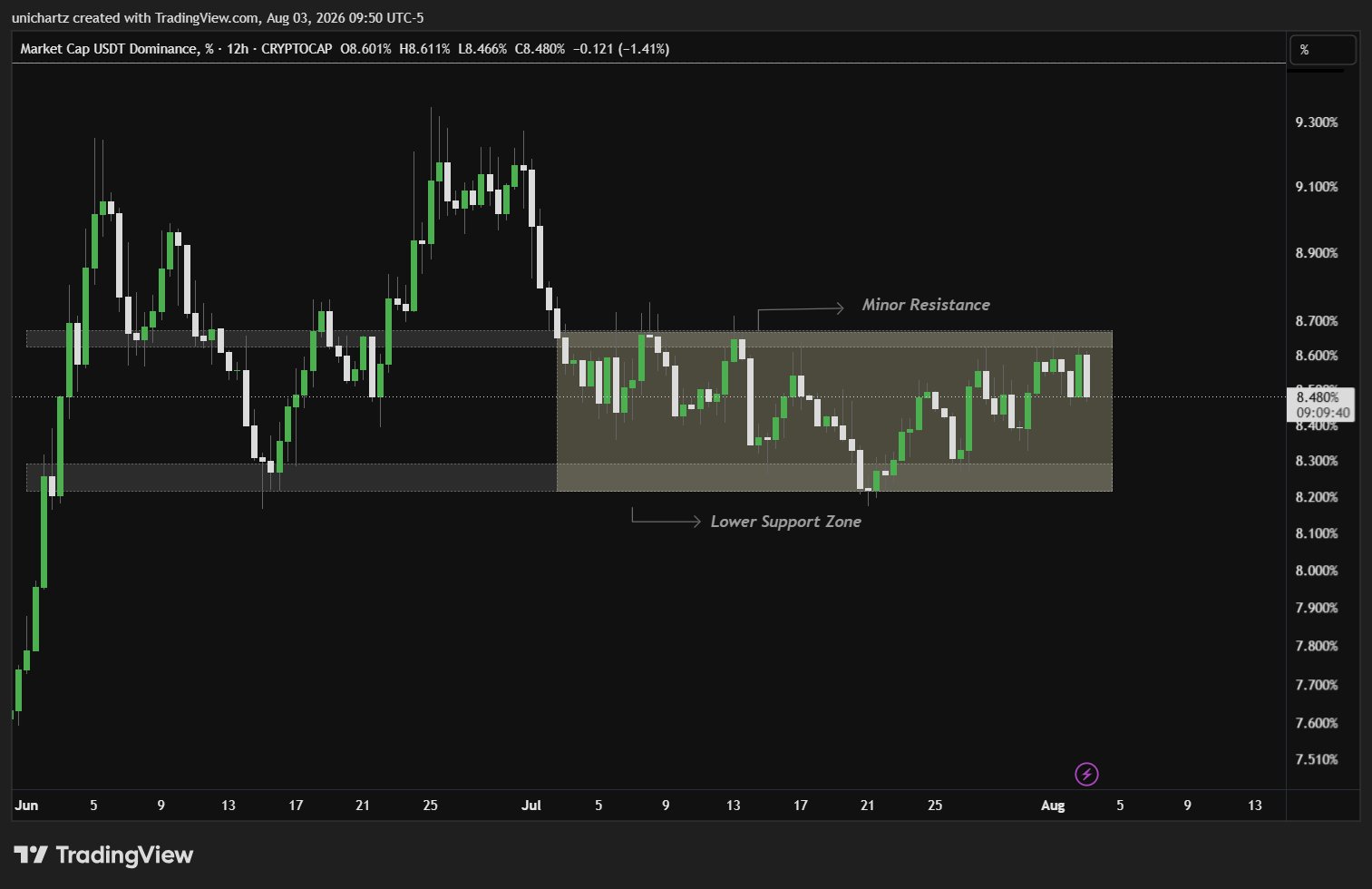
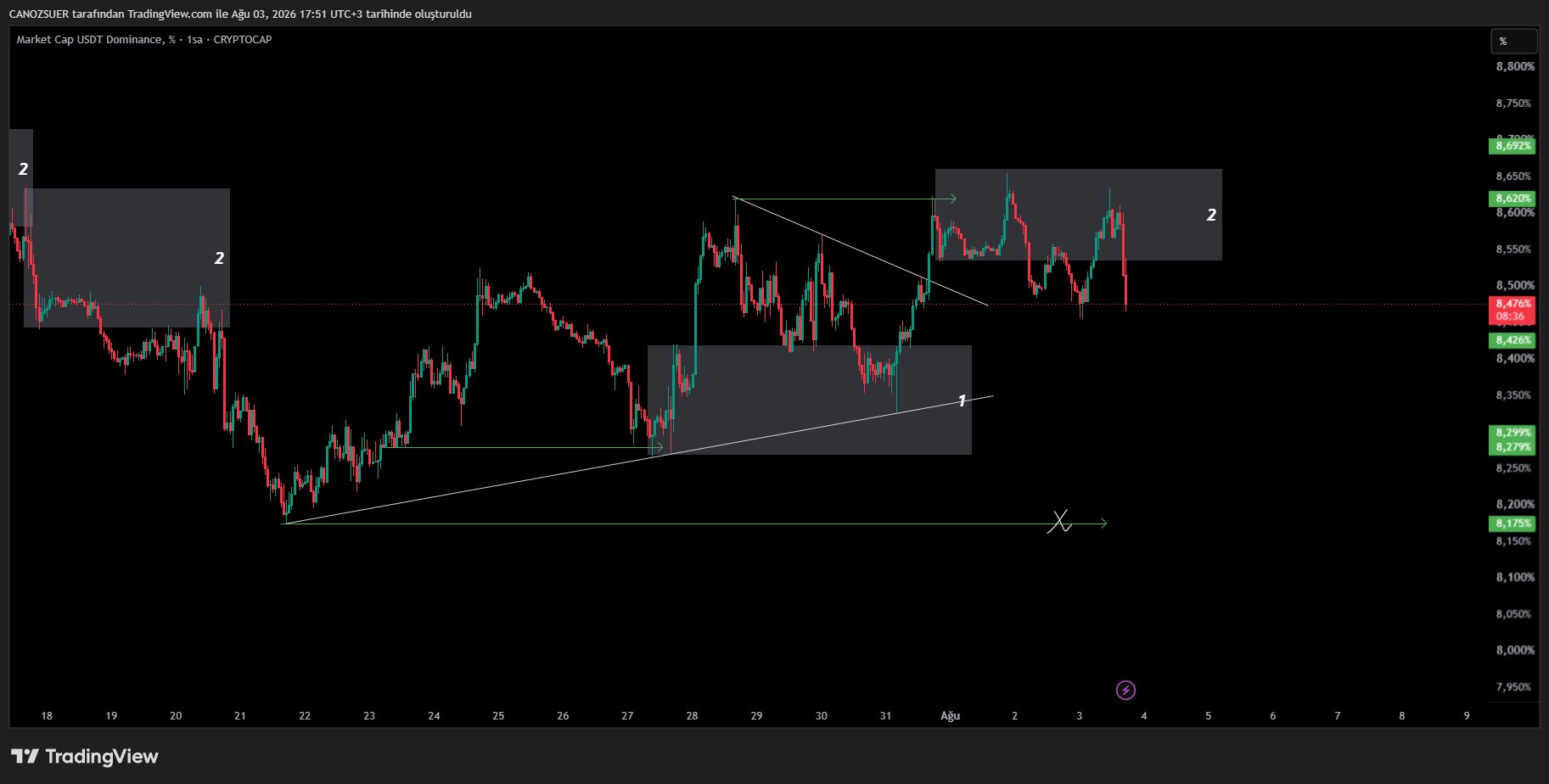
$USDT Dominance - Update
Give us that sweep of the lows before any attempt at new highs. https://t.co/i1k9Hrnicv

$USDT Dominance - Update
Give us that sweep of the lows before any attempt at new highs. https://t.co/i1k9Hrnicv
🇮🇳 BINANCE INDIA's NEW CRYPTO TRANSFER RULES (June 2026)
Starting 22 June 2026, Binance has made crypto transfers for Indian users much more like bank transfers.
Whenever you deposit from or withdraw to an external wallet/exchange, you'll need to provide detailed information about the sender or receiver.
This does NOT affect spot trading, futures trading, or holding assets on Binance.
What Changed?
For Withdrawals (Binance → Wallet/Exchange)
You must provide:
✅ Beneficiary Name
✅ Country of Residence
✅ City/Town/Village
✅ Receiving Exchange Name (if applicable)
✅ Whether it's your own wallet or someone else's wallet
For Deposits (Wallet/Exchange → Binance)
You must provide:
✅ Sender Name
✅ PAN or National ID
✅ Country of Residence
✅ Full Address + PIN Code
✅ Originating Wallet/Exchange Details
Important ➡️ No Minimum Threshold
Unlike many countries that only apply Travel Rule checks above ~$1,000,
🇮🇳 India applies these checks to ALL transfers regardless of size.
Even a $10 transfer can require disclosures.
Why Is Binance Doing This?
Binance is complying with:
FATF Travel Rule
FIU-IND Guidelines
PMLA (Anti-Money Laundering Law)
Indian Crypto Compliance Requirements
India now treats crypto exchanges similarly to banks for AML monitoring.
🤔What This Means for Retail Traders
1️⃣ Privacy Is Basically Gone on CEX Transfers
Every Binance ↔ Wallet transfer now creates a clear link between:
Your identity
Your PAN
Your exchange account
Your wallet addresses
Your counterparties
Crypto transfers through regulated exchanges are becoming fully traceable.
2️⃣ Tax Authorities Will Have Better Visibility
Since transfers are linked to:
PAN
KYC
Exchange Records
Travel Rule Data
It becomes much easier for authorities to detect:
❌ Unreported profits
❌ Tax evasion
❌ Undisclosed wallet activity
3️⃣ P2P & Grey-Market Routes Are Becoming Riskier
The Indian government is aggressively targeting:
Unofficial remittance services
Crypto-based international money transfers
Offshore P2P networks
Recent ED investigations involved alleged violations exceeding ₹2,500 Cr.
Using USDT as a replacement for international banking is increasingly risky.
🫡What Retail Traders Should Do Now
✅ Use FIU-Registered Exchanges
Examples: Binance India, CoinDCX, CoinSwitch,
Coinbase India
Stay on compliant platforms.
✅ Keep Clean Records
Maintain:
Transaction history
Deposit/withdrawal records
Wallet ownership records
Tax calculations
You'll likely need them later.
✅ Report Crypto Taxes Properly
Remember:
30% tax on gains
No loss offset
1% TDS on many transactions
Tax scrutiny is only increasing.
✅ Expect Transfer Delays
If information is:
Missing
Incorrect
Inconsistent
Transfers can be:
Delayed
Rejected
Returned
✅ Keep Long-Term Holdings in Self-Custody
Good practice:
🔹 Trading capital → Exchange
🔹 Long-term holdings → Hardware wallet/self-custody wallet
This reduces exchange risk, although transfers to/from exchanges will still require Travel Rule disclosures.
🟢 For Long-Term Investors
Very little changes.
Buy → Hold → Sell on regulated exchanges.
Just maintain tax records.
🟡 For Active Traders
Main pain points:
More transfer friction
More reporting
More tax visibility
Reduced privacy
Frequent movement between wallets and exchanges becomes less convenient.
🔴 For People Using Crypto for International Transfers
This group is most affected.
If you're using:
USDT remittances
Informal crypto transfers abroad
P2P international settlement
You are now directly in regulators' focus area.
So The biggest takeaway is:
India is transforming crypto transfers into a bank-like system.
The era of using major exchanges as semi-anonymous bridges between wallets, exchanges, and international transfers is rapidly ending.
For most retail users, the safest strategy is:
✅ Use FIU-compliant exchanges
✅ Keep proper tax records
✅ Avoid unofficial cross-border transfers
✅ Expect full identity disclosure for on-chain CEX transfers
Trading on Binance itself remains unchanged. The new rules only affect deposits and withdrawals involving external wallets or other exchanges.
Because the Bitget AI Hackathon prize is so high, many people have recently been asking whether the Hackathon is no longer open for participation.
Actually it still is. Even if you didn't register before, you can still directly submit a project to compete now, without needing to pre‑register.
Let me entice everyone once more by introducing the prize pool:
Total prize pool: 50,000 USDT
First prize: 6,600 USDT
And as long as you complete a valid submission and post, you get an additional 50 USDT reward
If you have an idea, you can start working on it now, or if you already have a ready product or demo, you can submit it directly at this link: https://t.co/hJdtoecpL1
I just submitted my own US stock trading Agent, using Bitget Agent Hub's 58 APIs + perception module to create a private custom solution. The data layer is all set up for you. And you don’t need to know code; by writing trading ideas in natural language, Bitget Playbook directly generates the strategy, runs backtests, and deploys.
Finally, I hope to win a prize~
#BitgetHackathon @Bitget_AI
Bitget AI Hackathon S1 submissions are live!
Missed registration? You can still submit and compete for $50,000 USDT.
🏆 Grand Prize: $6,600 USDT
🎁 Valid submission + post: $50 USDT
Submit now: https://t.co/Z91UqxRmnc
CN: https://t.co/iCj2STexgh https://t.co/ELS3RKhJoc