The evolution of Web3 identity infrastructure: From proof of humanity to proof of value
The Web3 identity and reputation scoring sector is facing a major inflection point. While the first generation of infrastructure solved the baseline problem of human verification for sybil resistance, the next generation must answer what the quantitative value of that entity is to the network.
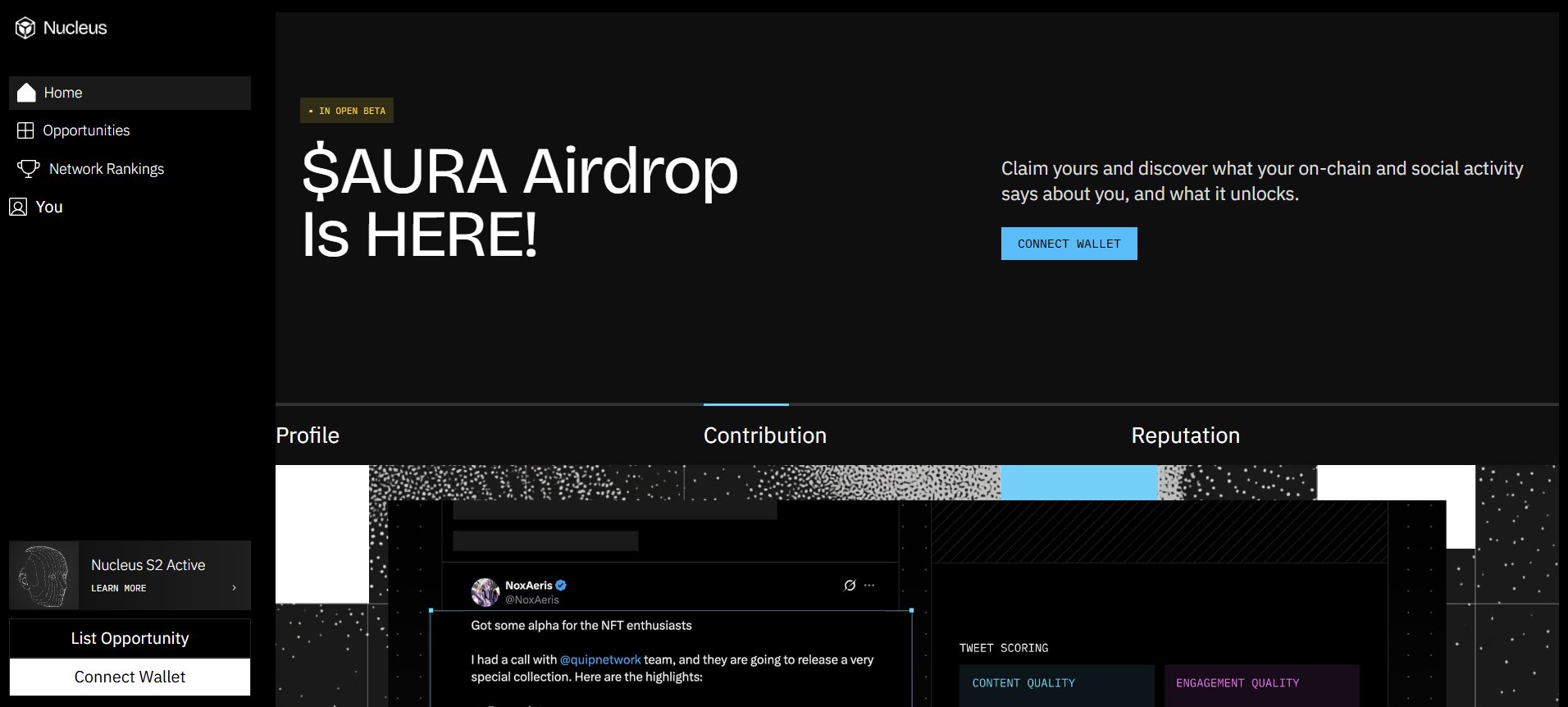
Analyzing the operational structure of @NucleusCodes reveals core differentiators against industry competitors:
Reputation as an evolving asset: While legacy systems store credentials as static structures locked in wallets, Nucleus turns reputation into an asset capable of self-evolution based on real-time contributions, interactive behavior, and referrals.
Contextual data isolation: The system parses data to identify the exact narrative where a user holds the strongest influence, ensuring relevance rather than applying flat scoring models.
Explicit $AURA quantification structure: Based on data from the image_30aeed.jpg document, implementing a strict tiered leaderboard in Season 2 (e.g., Top 10 securing 2500 $AURA or Top 101-1000 securing 500 $AURA) is how the project quantifies early contribution. This volume directly dictates the weight of the future off-chain reputation score.
As the market demands high efficiency in liquidity distribution, reputation is no longer a decorative badge; it becomes the metric defining the market ceiling of every individual.