Rewards
Futures Daily Draw
100% Chance To Win With Daily Trades
Spot Daily Draw
Win 8,888 USDT In Grand Prizes
Mobile Top-Up
Top up mobiles easily, online, secure
Send
Send money globally, fast and secure
BitMart Mall
Live on crypto

Équilibre (VARA)
$ 0.0000011 (VARA/USD)
0%
24H
Équilibre VARA Price History USD
Track the price of Équilibre for today, 7 days, 30 days and 90 days
Period
Change
Change (%)
Today
--
--
7days
$ 0
0.00%
30days
$ 0.000000091
-7.27%
90days
$ 0.00000043
-27.23%
Own VARA Now
Buy and sell VARA easily and securely on BitMart.
Équilibre Market Information
$ 0.0000011 24h Range $ 0.21
All time high
$ 0.21
All time low
$ 0.0000011
24h Change
24h Vol
0
Circulating supply
0.00
VARA
Market cap
0
Max supply
--
Fully diluted market cap
0
Trade VARA

Équilibre X Insight

Shashwat Chauhan
Trader
Dev
B
 1.4K @Shashwat_web3
 Bullish
Vara ecosystem team is shifting from development to product delivery, showing positive progress.
Shashwat Chauhan
Trader
Dev
B
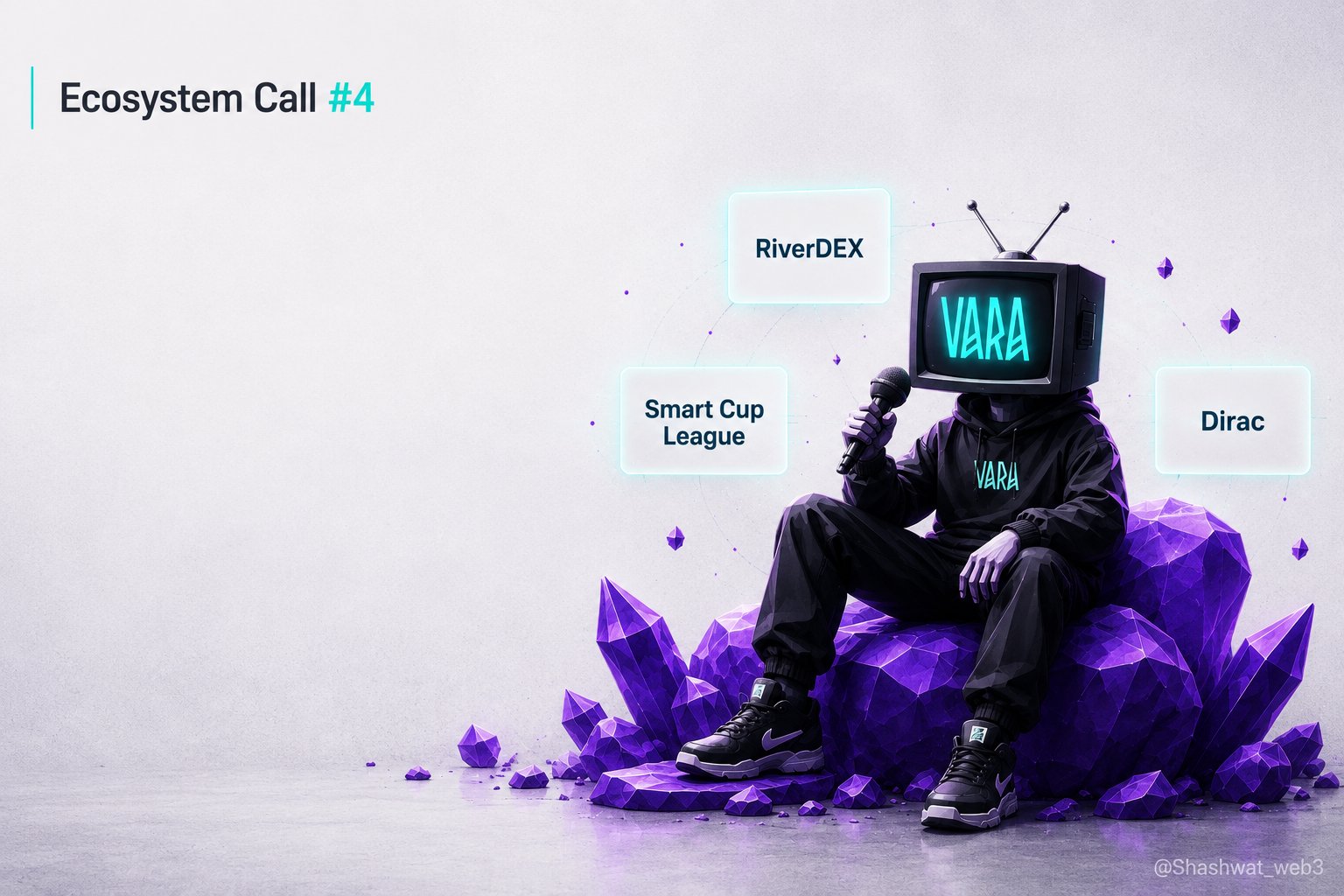
1.4K @Shashwat_web3 Missed the latest Vara Ecosystem Call?
I listened to it, and here are a few updates that caught my attention. 👇
A lot of teams are finally moving from building to shipping. https://t.co/bLBAGliX6G
 12
12
 1
1
 445
445
2026-08-03 14:12
Trend of VARA after release
Bullish
Vara ecosystem team is shifting from development to product delivery, showing positive progress.

O.N.Y.E.M.A🕵🏽♂️
Media
Community_Lead
B
5.4K @ioDeFi Bullish
VARA raises asset compliance standards, with 52 VASPs registered

MANTRA | The EVM L1 for RWAs D
375.3K @MANTRA_Chain VARA continues to raise the bar for virtual asset regulation.
As traditional finance and blockchain converge, VARA is setting a global standard for compliance, with 52 licensed VASPs now listed on its public register. https://t.co/XDrP3p3KxQ
90
19
9.7K
2026-08-03 07:17
Trend of VARA after release
Bullish
VARA raises asset compliance standards, with 52 VASPs registered
Shashwat Chauhan
Trader
Dev
B
1.4K @Shashwat_web3 Extremely Bullish
Vara ecosystem team is shifting from development to product delivery, showing positive progress.
Missed the latest Vara Ecosystem Call?
I listened to it, and here are a few updates that caught my attention. 👇
A lot of teams are finally moving from building to shipping. https://t.co/bLBAGliX6G
12
1
445
2026-08-02 11:12
Trend of VARA after release
Extremely Bullish
Vara ecosystem team is shifting from development to product delivery, showing positive progress.
Price Prediction
When is a good time to buy VARA? Should I buy or sell VARA now?
When deciding whether it’s a good time to buy or sell Équilibre (VARA), it’s important to first align with your own trading strategy and risk profile.Long-term investors and short-term traders often interpret market conditions differently, so your decision should reflect your personal approach. According to the latest VARA 4-hour technical analysis, the current trading signal is Sell. According to the latest VARA 1-day technical analysis, the current signal is Hold.

Beacon Prediction
Probabilistic Price Forecast (Next 24 Hours)Beacon Prediction Disclaimer
The data results displayed on this page are analyzed based on actual trading data (OHLCV) of the selected trading pair along with corresponding technical indicators.
This prediction is an experimental technical product and is provided for reference purposes only. It does not constitute investment advice. Unexpected real-world events may significantly impact market behavior. Traders should make decisions with caution.
This prediction is an experimental technical product and is provided for reference purposes only. It does not constitute investment advice. Unexpected real-world events may significantly impact market behavior. Traders should make decisions with caution.
About Équilibre
Équilibre (VARA) is a cryptocurrency and operates on the Kava platform. Équilibre has a current supply of 41,000,000 with 0 in circulation. The last known price of Équilibre is 0.00000116 USD and is up 0.00 over the last 24 hours. It is currently trading on 10 active market(s) with $0.00 traded over the last 24 hours. More information can be found at https://equilibrefinance.com/swap.
Read More