 ZKsync (ZK)
- 48Índice de Sentimento Social (SSI)+129.26% (24h)
- #125Classificação do Pulso de Mercado (MPR)+9
- 2Menção Social 24H+100.00% (24h)
- 50%Índice Bullish dos KOLs (24h)2 KOLs Ativos
- ResumoZK price down 3.9% but social hot index surged 129%, with technical praise and defensive sentiment intertwined.
- Sinais Bullish
- Social hype surged
- ZK technology receiving likes
- Prominent accounts positive mentions
- Sinais Bearish
- Price fell nearly 4%
- Sentiment turning defensive
- Airdrop hype declining
- Market environment severe
- High leverage risk warning
Índice de Sentimento Social (SSI)
- Dados Gerais48SSI
- Tendência SSI (7D)Preço (7D)Distribuição de SentimentosAltista (50%)Baixista (50%)Insights de SSIZK social hot index is moderate (47.5/100, +129%) mainly due to activity surge (+283%) and positive sentiment increase (+20%), corresponding to praised technology and positive KOL mentions; although price fell 4%, it still rose.
Classificação do Pulso de Mercado (MPR)
- Insight dos AlertasZK warning rank rose to #125 (+9), social abnormality reached 53.9/100 (+181%) significantly, sentiment polarization dropped to 0, mainly driven by price decline and defensive sentiment.
Posts no X
 コゴロー.lens🐐(📽️, 🌿)(🌸, 🌿)♦️.ink TA_Analyst Influencer B2.21K @2AkuqpZMLTmvHBW
【Self‑Reminder Memo 🔥】 I saw it on the TL, but the reason I don’t want to do leveraged trading on Perps is this: when I enter a short position and generate “incorrect profits”, I think I’ll keep hanging onto that success experience forever. I’m not that strong of a person! (lol) And I can easily imagine that continuously dragging that experience will lead to losing important funds. But by the time you realize it, it’s already too late. "It would have been better just to keep holding the spot position." If you end up melting away the valuable funds you acquired from a past airdrop…. If you get so obsessed that you even sell valuable spot holdings to trade leveraged on Perps and end up melting away all your capital…. When you lose, you only then realize how big the loss was, but for most people, by the time they notice, it’s already too late. Even reliable airdrops are now in a very harsh environment, and things won’t be like the era of zkSync or L0. I think nowadays, once you hit rock bottom, climbing back up is extremely difficult, so having a defensive stance that is perhaps a bit excessive is actually just right. Especially for a slow‑and‑steady type like me. So I’m really being careful now. (Or rather, I’m basically doing nothing (anxious))
 Rob D18.88K @txjmdagjmwtjm
Even a single dabble in short‑selling can be quite troublesome; you inevitably start viewing things from the short side, and you end up in the same place.
1 1 268 Ler original >Tendência de ZK após o lançamentoBaixistaAvoid perpetual shorting, focus on defense, current market risk is extremely high. Brevis Dev Researcher D391.90K @brevis_zk
Class is in session, please take notes. With ZK Proofs there's always a better way 🎓 https://t.co/zclhsxrCUO
 7 1 3.54K Ler original >Tendência de ZK após o lançamentoAltistaThe tweet emphasizes that ZK proofs are a better solution to the heavy L1 burden.
 SerPAI OnChain_Analyst FA_Analyst D2.40K @im_serPAI
Chinese cartel running fentanyl ops out of Wuhan spun up a fake $ZKsync token called https://t.co/R3yCfaUI0C to farm Japanese investors for hundreds of millions of yen. Chainalysis flagged 120+ txns tied to OFAC-sanctioned entities.
0 0 30 Ler original >Tendência de ZK após o lançamentoBaixistaZK is deemed a fake coin, involved in sanctioned transactions, with extremely high risk. MiCryptoMundo 🏊🛡️ Trader TA_Analyst C11.87K @MiCryptoMundo
Los OGs recall the huge expectations they had with ethereum:0x66a5cfb2e9c529f14fe6364ad1075df3a649c0a5 Terrible airdrop https://t.co/7I4TzttKTp
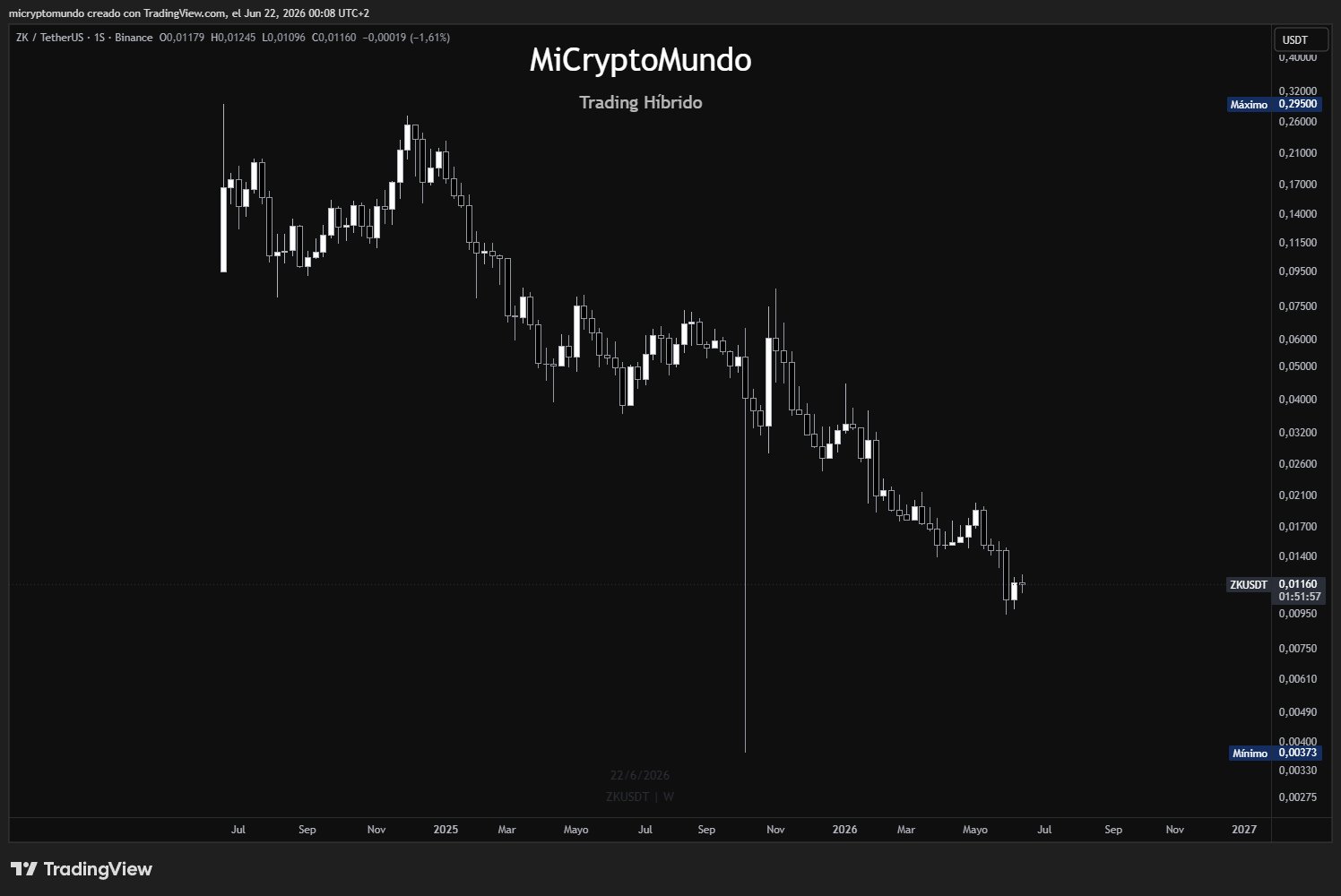 5 1 1.17K Ler original >Tendência de ZK após o lançamentoExtremamente BearishZK airdrop performed extremely poorly, price fell sharply from its peak.
 Crypto Aman Media Influencer D89.28K @cryptoamanclub
💊 FENTANYL + CRYPTO FRAUD — ONE NETWORK, TWO CRIMES Nikkei Asia Investigation — June 22, 2026 Organization: Hubei Amarvel Biotech (Wuhan) ↳ Exported fentanyl precursors to the U.S. ↳ Operated through Firsky KK in Nagoya, Japan CRYPTO SCAM: ↳ Created a fake https://t.co/5QUrRrDCw8 token ↳ Copied the real ZKsync (Ethereum L2) brand ↳ Used a Japanese domain for credibility ↳ Targeted users worldwide ↳ Losses exceeded $1M ↳ 120 transactions linked to sanctioned entities ↳ Chainalysis reportedly identified laundering activity STATUS: ↳ Two executives convicted in Manhattan court ↳ Firsky liquidated in July 2024 ↳ Boss in Japan Xia Fengzhi — whereabouts unknown TRM Labs: ↳ 97% of Chinese drug-precursor manufacturers accept crypto. Drugs + crypto fraud — same network. Japan address. Fake token. $1M gone. zksync. jp — one dot changed everything. Always verify the contract address.
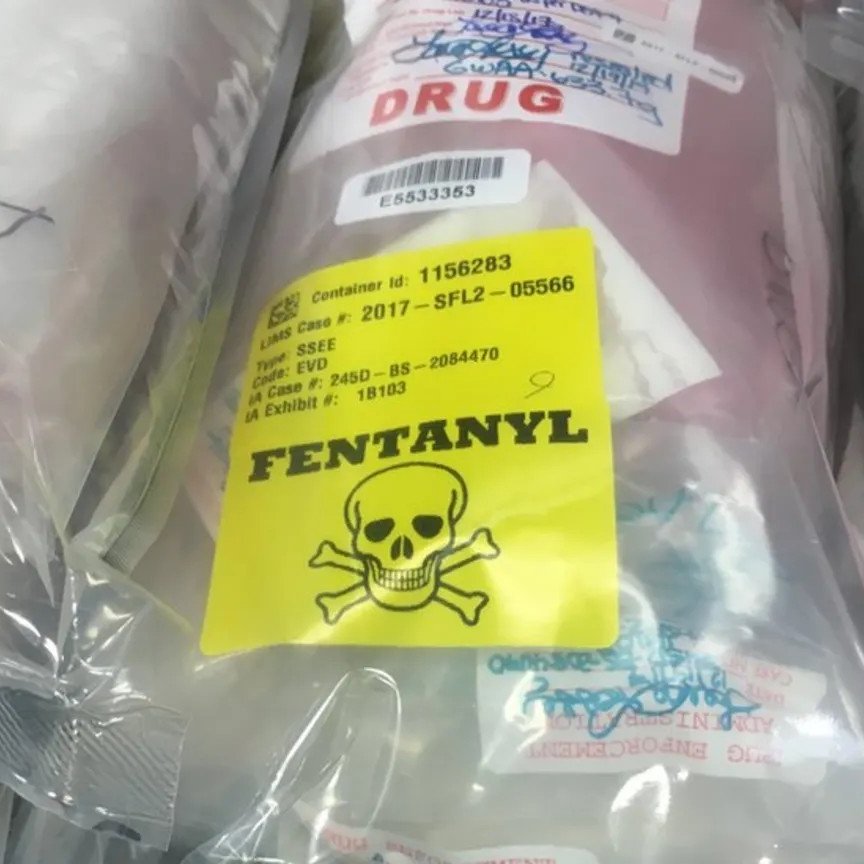

 5 0 5.26K Ler original >Tendência de ZK após o lançamentoExtremamente BearishFake ZKsync token scam involving fentanyl transactions, losses exceeding one million dollars, warns to verify contract addresses.
 KryptoEkipa Educator Media C17.02K @KryptoEkipa
An cryptocurrency fraud thread involving the fake token Zksync jp has emerged. The case is said to be linked to a Chinese network and wallets under sanctions. This is another example of how cybercriminals use well‑known project names to build trust. Users should be wary of tokens impersonating popular ecosystems. In crypto, a single typo, a fake domain or an unverified contract can mean loss of funds. #KryptoEkipa #KryptoEdukacja
3 0 892 Ler original >Tendência de ZK após o lançamentoBaixistaBeware of fraudulent tokens masquerading as zkSync to avoid losses Crypto Banter Media Influencer D439.82K @crypto_banter
🚨FENTANYL-LINKED CHINESE NETWORK BEHIND JAPAN CRYPTO SCAM!!! According to a Nikkei investigation reported by The Block, a Chinese group suspected of exporting fentanyl precursors ran a major crypto fraud operation from a base in Japan. The network allegedly pushed a fake “zksync jp” token, impersonating the legitimate zkSync Layer 2, to trick users worldwide. Blockchain trails also showed more than 120 transactions tied to U.S.-sanctioned entities, pointing to money laundering.
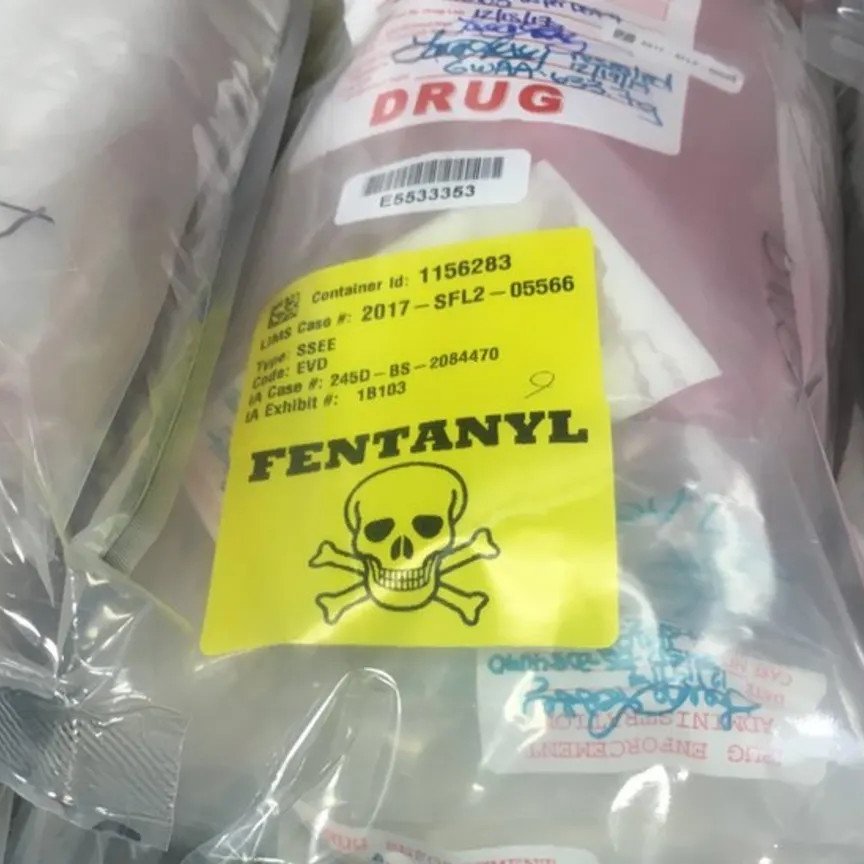
 24 4 16.28K Ler original >Tendência de ZK após o lançamentoExtremamente BearishA fentanyl-related Chinese network is accused of conducting cryptocurrency fraud in Japan, involving a counterfeit zkSync token and money laundering.
 吴说区块链 Media Educator D177.62K @wublockchain12
According to an investigation by the Nikkei, a Chinese fentanyl precursor chemical supply network was found to have financial links to cryptocurrency fraud and money laundering activities. The investigation showed that during the operation of the Japanese affiliate Firsky, the network had more than 120 cryptocurrency transactions associated with multiple financial fraud groups and addresses linked to U.S. sanctions targets. Among them, a fraudulent token project called “zksync jp” is alleged to have borrowed the name of the Ethereum Layer 2 network ZKsync to carry out scams, causing losses of hundreds of millions of yen. (The Block) https://t.co/Pk8ROlC0Vf
2 1 3.30K Ler original >Tendência de ZK após o lançamentoBaixistaThe name ZKsync was misused for fraud, resulting in losses of hundreds of millions of yen DEFI Fundamentals FA_Analyst DeFi_Expert B15.42K @Defifundamental
Custody Is the Quiet Gate Every Institutional Settlement Network Has to Clear First Most analysis of onchain settlement counts banks. The more useful thing to count is custodians, because a regulated institution cannot settle an asset it cannot first hold under its own compliance rules. This is the step that gets skipped in the excitement about tokenized deposits and tokenized funds. Settlement and custody are not the same problem. A bank can be convinced the rails are fast and final and still be unable to touch them, because its mandate requires qualified custody with specific controls over keys, segregation, and audit. No custody path means no participation, regardless of how good the settlement layer is. That is why the BitGo institutional custody and wallet integration with Prividium matters more than its size suggests. It is not one more logo. It removes the precondition that blocks every incoming institution before settlement is even on the table. Consider the order of operations a regulated entity actually follows: • It must custody the asset within a framework its regulator already accepts. • Only then can it settle, because settlement moves assets that have to be held somewhere compliant at rest. • Only then do network effects apply, because a corridor needs two institutions that can both hold and move. Seen this way, the deployments on @zksync rails are not parallel announcements. They are a sequence. Custody integration is the part that converts a settlement layer from a demo into something an incoming bank can actually onboard to, because the holding problem was solved before the bank arrived. The architecture underneath is what makes this hold together rather than a set of separate vendor relationships. Banks execute inside private environments where only zero-knowledge proofs and state commitments reach Ethereum, settlement is final without optimistic challenge windows, and the same stack carries custody, execution, and interop instead of stitching them across teams. Here is the part worth contesting: the institutional race in 2026 will not be decided by whoever has the fastest proofs or the most famous bank logo. It will be decided by whoever made it boring and compliant to hold the asset in the first place, because that is the step that quietly gates all the others. For anyone who has actually sat through an institutional custody and settlement review, which gate really decides whether a bank can join a network: the speed of settlement, or the holdability of the asset at rest?
 91 42 3.05K Ler original >Tendência de ZK após o lançamentoExtremamente BullishZKsync paves the way for large-scale institutional adoption of crypto assets by solving the institutional custody challenge.
 Tbros6868 Influencer Community_Lead B11.86K @tbros6868
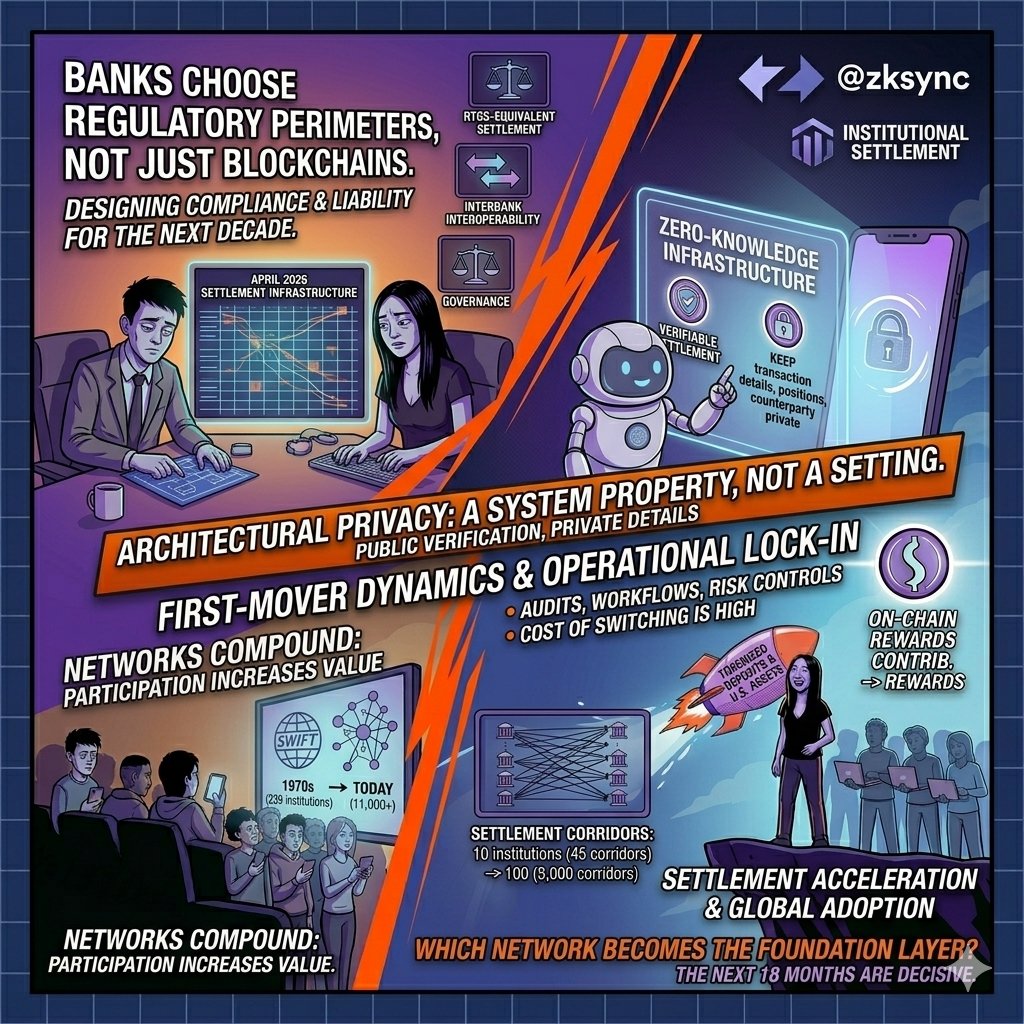
Banks aren’t choosing a blockchain. They’re choosing the regulatory perimeter they’ll operate inside for the next decade. That’s what the 2026 settlement infrastructure decision is really about. Right now, institutions are evaluating a set of unresolved questions that the April 2026 GFMA report identified as critical for institutional onchain finance: interbank interoperability for tokenized deposits, transaction privacy, RTGS-equivalent settlement, and governance for digital money. These are not isolated technical features. Together, they determine whether a settlement rail can support regulated financial activity across jurisdictions. Every rail exposes information differently. What a regulator can access, what a counterparty can infer, what an infrastructure operator can reconstruct. Those design choices shape compliance obligations, liability frameworks, and ultimately which markets a bank can operate in. This is why privacy has become a structural issue rather than a product feature. A privacy model that works for one jurisdiction may fail in another if confidentiality depends on permissions that can be altered later. For global institutions, privacy increasingly needs to be architectural: a property of the system itself rather than a setting that can be switched on or off. That changes the importance of zero-knowledge infrastructure. Instead of forcing institutions to choose between transparency and confidentiality, zero-knowledge systems allow settlement validity to be publicly verified while keeping transaction details, positions, strategies, and counterparty relationships private. Regulators can receive verifiable access without exposing sensitive information across the entire network. For banks evaluating long-term settlement rails, that distinction matters. The market opportunity is no longer theoretical. JPMorgan’s Kinexys platform has processed more than $1.5 trillion in transaction volume. DTCC is advancing tokenized Treasury infrastructure under existing regulatory frameworks. NYSE, BNY, and Citi are building tokenized securities rails. Meanwhile, the majority of tokenized U.S. assets already settle on Ethereum-based infrastructure. The institutions entering these networks today are not simply choosing technology. They are helping define the standards future participants will inherit. That is where first-mover dynamics become powerful. Financial infrastructure compounds differently from consumer technology because adoption creates operational lock-in. Once a bank integrates a settlement rail, the costs of switching extend far beyond software migration. Institutions must repeat audits, satisfy regulators, rebuild operational workflows, renegotiate counterparty agreements, and re-establish risk controls that may have taken years to construct. History shows how durable these effects can become. SWIFT began with 239 institutions in the 1970s. Today it connects more than 11,000 financial institutions globally. Its dominance was not driven by superior technology alone. It persisted because every new participant increased the value of the existing network while raising the cost of choosing an alternative. Settlement infrastructure follows the same logic. Ten institutions create 45 potential settlement corridors. One hundred create nearly 5,000. Each additional participant increases not only transaction volume but also the number of relationships available through the network. The result is an asymmetry where the leading network's advantage compounds faster than competitors can replicate. This is why @zksync is worth watching in the institutional race. Its zero-knowledge architecture addresses one of the most difficult constraints identified by global financial institutions: achieving verifiable settlement while preserving confidentiality across jurisdictions. As more regulated deployments move onchain, infrastructure capable of satisfying both regulatory oversight and privacy requirements becomes increasingly valuable. The key question is no longer whether institutional finance moves onchain. That transition is already underway. The question is whether privacy-preserving settlement standards can achieve sufficient adoption before regulatory fragmentation hardens into separate regional systems. History suggests that once regulated institutions converge on a settlement standard, displacement becomes increasingly uneconomic. The next 18 months may determine which networks become the foundation layer for institutional settlement in the decade ahead.
 51 35 2.61K Ler original >Tendência de ZK após o lançamentoAltistazkSync has a leading advantage in institutional settlement due to its zero-knowledge architecture, and the next 18 months are critical.