 ZKsync (ZK)
- 24社交热度指数(SSI)-33.58% (24h)
- #129市场预警排名(MPR)-1
- 124小时社交提及量-50.00% (24h)
- 0%24小时KOL看好比例1位活跃KOL
- 概要用户警示杠杆永续风险,称空投资金已蒸发,市场环境严峻,建议防御持仓
- 看涨信号暂无数据
- 看跌信号
- 杠杆永续风险高
- 空投资金已蒸发
- 市场环境严峻
- 建议防御持仓
- 价格跌2.41%
社交热度指数(SSI)
- 总体数据24SSI
- 社交热度趋势(7D)价格(7D)情绪分布看跌 (100%)社交热度洞察ZK社交热度低(24.27/100,-34%),活跃度跌50%情绪正面降16.7%,KOL关注几乎不变,与空投资金蒸发及防御情绪关联。
市场预警排名(MPR)
- 预警解读ZK预警排名轻微下滑至#129(↓1),社交异常度骤降72%至15.59,情绪极化仍高50,对应杠杆永续高风险警示。
相关推文
 コゴロー.lens🐐(📽️, 🌿)(🌸, 🌿)♦️.ink 技术分析师 意见领袖 B2.21K @2AkuqpZMLTmvHBW
【自律备忘🔥】 虽然在 TL(推特时间线)上看到这件事,但我不想在永续合约(Perp)进行杠杆交易的原因就是——如果做空进场并获得“错误的利润”,我会一直被那段成功体验所牵绊。毕竟我不是那种坚强的人!(笑) 而且,我还能想象持续被牵绊最终会失去重要的资金。但等到意识到时,已经太迟了。 “要是当时一直持有现货就好了” 如果把曾经通过空投获得的宝贵资金全部挥霍掉…… 甚至执意卖掉珍贵的现货去做永续杠杆交易,结果把资金全部蒸发了…… 等到失去时,才第一次意识到失去的东西有多大,但普通人往往在意识到时已经太晚了。 即便是可靠的空投,现在也处于非常严苛的环境,已经不像 zkSync 或 L0 那样的时代了。 我认为现在只要一次跌入谷底,想要爬起来就异常困难,所以防御力度甚至过度一些恰恰合适。尤其是像我这种笨拙且踏实的类型。 所以,我现在真的非常谨慎地操作。(其实基本上什么都没做啦(焦))
 Rob D18.88K @txjmdagjmwtjm
只要一次沾手做空就会相当麻烦,因为总会不自觉地从空头的视角看问题,结果终究是一样的。
5 1 1.33K 阅读原文 >发布后ZK走势看跌避免永续做空,防御为主,当前市场风险极高 Brevis 开发者 研究员 D391.90K @brevis_zk
上课了,请做好笔记。使用 ZK Proofs 总有更好的方法 🎓 https://t.co/zclhsxrCUO
 7 1 3.84K 阅读原文 >发布后ZK走势看涨推文强调ZK证明是解决L1负担过重问题的更好方案。
 SerPAI 链上数据分析 基本面与宏观经济 D2.40K @im_serPAI
一个来自武汉、从事芬太尼业务的中国卡特尔制造了一个假 $ZKsync 代币,链接为 https://t.co/R3yCfaUI0C,以吸引日本投资者,募集数亿日元。 Chainalysis 标记了 120 多笔 与 OFAC 制裁实体 相关的交易。
0 0 32 阅读原文 >发布后ZK走势看跌ZK 被指为伪币,涉及制裁交易,风险极高 MiCryptoMundo 🏊🛡️ 交易员 技术分析师 C11.87K @MiCryptoMundo
OG们回忆起他们对以太坊的巨大期待:0x66a5cfb2e9c529f14fe6364ad1075df3a649c0a5 空投糟透了 https://t.co/7I4TzttKTp
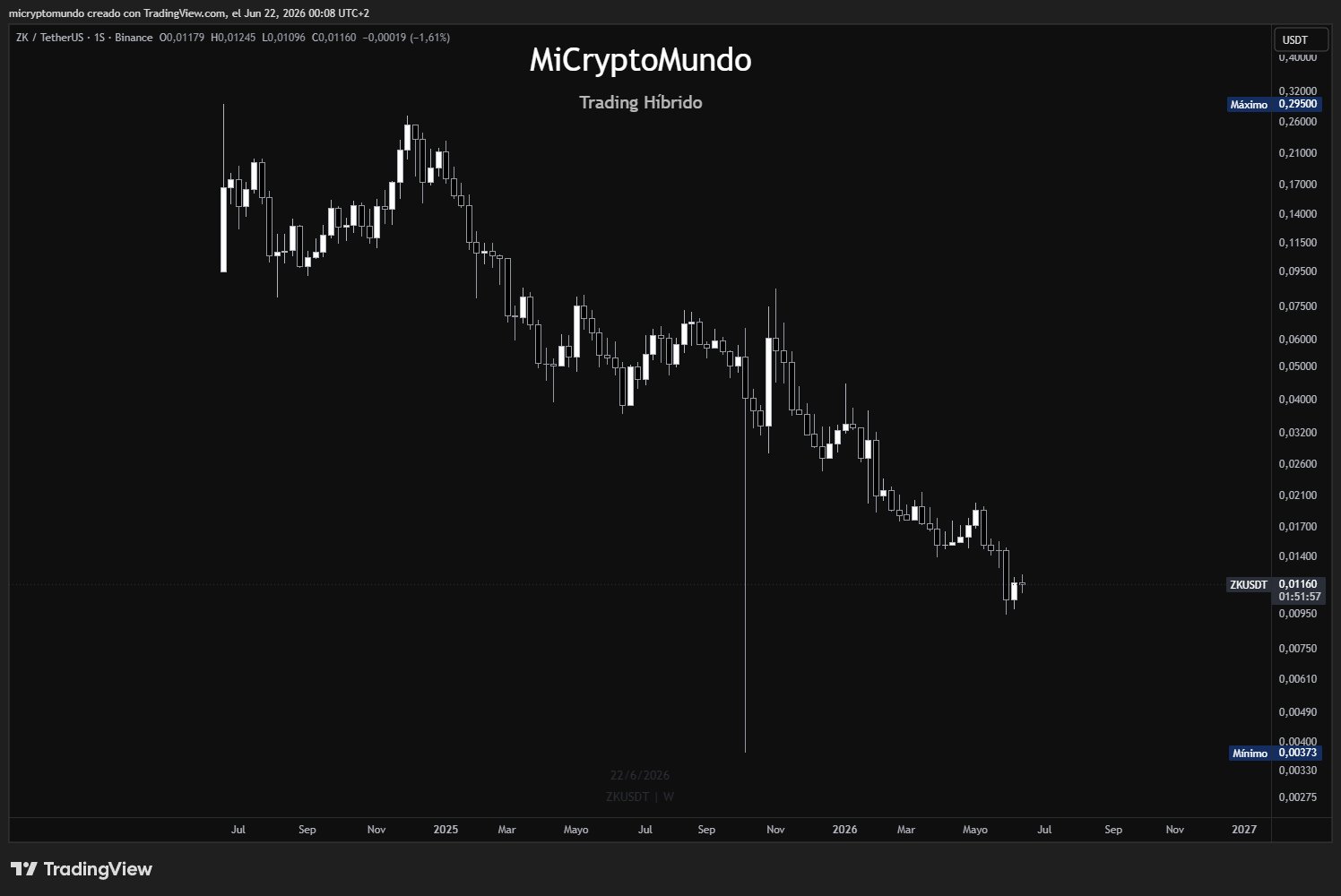 5 1 1.18K 阅读原文 >发布后ZK走势极度看跌ZK空投表现极差,价格从高点大幅下跌。
 Crypto Aman 媒体人 意见领袖 D89.29K @cryptoamanclub
💊 芬太尼 + 加密诈骗 — 同一网络,双重犯罪 Nikkei Asia 调查 — 2026年6月22日 组织: 湖北 Amarvel 生物科技(武汉) ↳ 向美国出口芬太尼前体 ↳ 通过日本名古屋的 Firsky KK 运营 加密诈骗: ↳ 创建了一个假 https://t.co/5QUrRrDCw8 代币 ↳ 仿冒真实的 ZKsync(以太坊 L2)品牌 ↳ 使用日本域名以提升可信度 ↳ 目标用户遍及全球 ↳ 损失超过 100 万美元 ↳ 120 笔交易与受制裁实体有关联 ↳ 据称 Chainalysis 发现了洗钱活动 状态: ↳ 两名高管在曼哈顿法院被定罪 ↳ Firsky 于2024年7月清算 ↳ 日本老板夏丰志——下落不明 TRM Labs: ↳ 97% 的中国药物前体制造商接受加密货币。 药物 + 加密诈骗 — 同一网络。 日本地址。 假代币。 100 万美元消失。 zksync.jp — 一个点改变了一切。 始终验证合约地址。
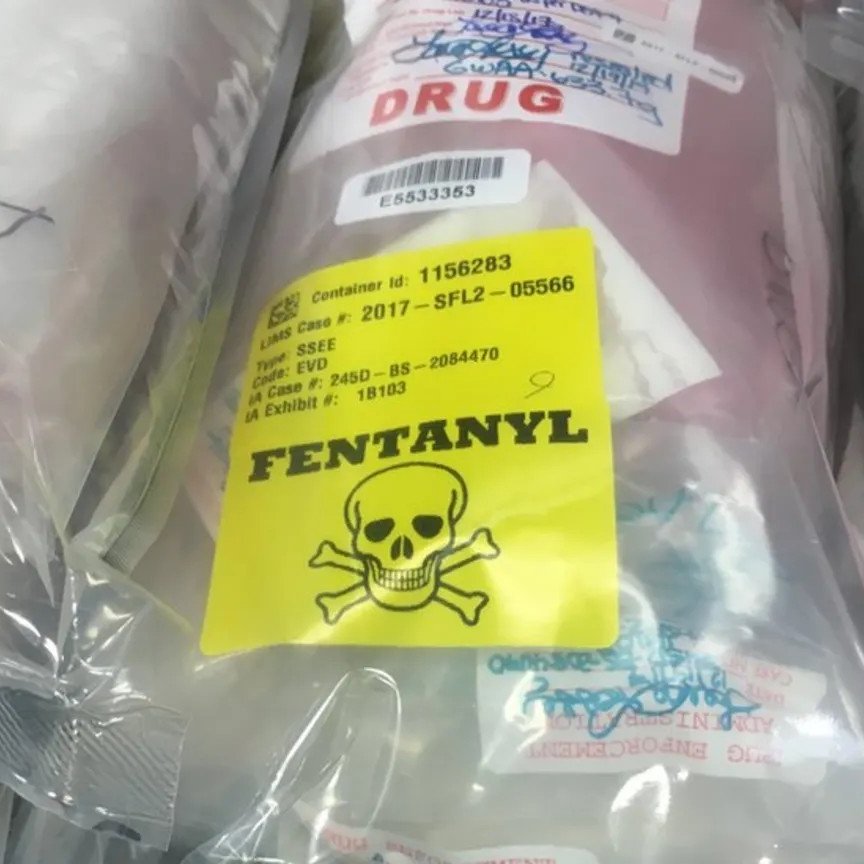

 5 0 5.28K 阅读原文 >发布后ZK走势极度看跌假冒ZKsync代币诈骗案涉芬太尼交易,损失超百万美元,警示验证合约地址。
 KryptoEkipa 教育者 媒体 C17.02K @KryptoEkipa
出现了与假冒代币 Zksync jp 相关的加密货币诈骗话题。 此事据称与中国网络以及受制裁的钱包有关。 这是又一例,网络犯罪分子利用知名项目名称来建立信任。 用户应当警惕冒充流行生态系统的代币。 在加密领域,一个拼写错误、假域名或未验证的合约都可能导致资金损失。 #KryptoEkipa #KryptoEdukacja
3 0 892 阅读原文 >发布后ZK走势看跌警惕伪装为zkSync的欺诈代币,避免损失 Crypto Banter 媒体人 意见领袖 D439.82K @crypto_banter
🚨FENTANYL-LINKED CHINESE NETWORK BEHIND JAPAN CRYPTO SCAM!!! 根据《Nikkei》调查并由《The Block》报道,一家涉嫌出口芬太尼前体的中国团伙在日本的基地开展了大型加密货币诈骗行动。 网络据称推出了假冒的“zksync jp”代币,冒充合法的 zkSync Layer 2,以欺骗全球用户。 区块链追踪还显示有超过120笔交易与美国制裁实体有关,指向洗钱行为。
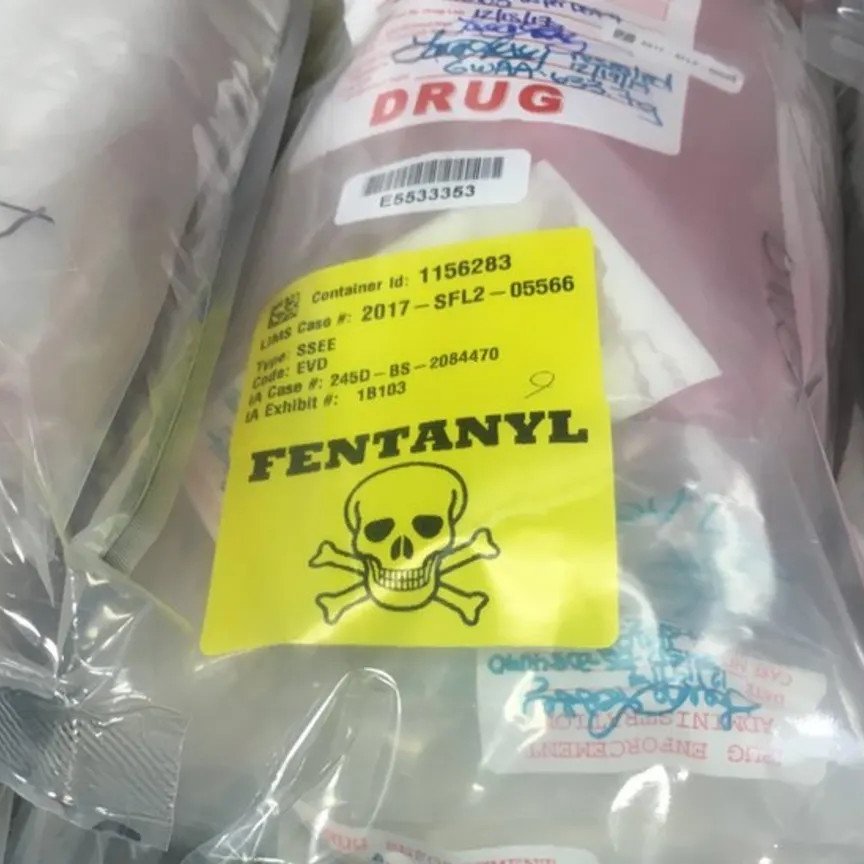
 24 4 16.32K 阅读原文 >发布后ZK走势极度看跌芬太尼相关中国网络被指控在日本进行加密货币诈骗,涉及假冒zkSync代币和洗钱。
 吴说区块链 媒体人 教育者 D177.62K @wublockchain12
据《日本经济新闻》调查,一家中国芬太尼前体化学品供应网络被发现与加密货币诈骗及洗钱活动存在资金关联。调查显示,该网络通过日本关联公司 Firsky 运营期间,与多个金融诈骗团伙及美国制裁对象相关地址存在超过 120 笔加密货币交易。其中,一个名为“zksync jp”的虚假代币项目涉嫌借用以太坊 Layer 2 网络 ZKsync 的名称实施诈骗,造成数亿日元损失。(The Block)https://t.co/Pk8ROlC0Vf
2 1 3.30K 阅读原文 >发布后ZK走势看跌ZKsync名称被冒用进行诈骗,导致数亿日元损失 DEFI Fundamentals 基本面分析师 DeFi专家 B15.42K @Defifundamental
托管是每个机构结算网络必须首先跨越的静默门槛 大多数链上结算分析都在统计银行。更有价值的统计对象是托管机构,因为受监管的机构只能在先持有资产并符合自身合规规则的前提下进行结算。 在对代币化存款和代币化基金的热情中,这一步常被跳过。结算和托管不是同一问题。即使银行认同通道快速且最终确定,仍可能无法使用,因为其授权要求具备合格的托管,包括对密钥、隔离和审计的特定控制。没有托管路径就没有参与,无论结算层多么优秀。 这就是 BitGo 与 Prividium 的机构托管和钱包集成重要性超过其规模表象的原因。它不只是又一个标识,而是消除在结算甚至未被提及时就阻塞所有进入机构的前提条件。 考虑受监管实体实际遵循的操作顺序: • 必须在监管机构已接受的框架内托管资产。 • 只有这样才能结算,因为结算会转移必须在合规环境中静置的资产。 • 只有这样网络效应才会生效,因为一个通道需要两个既能持有又能转移资产的机构。 从这个角度看,@zksync 通道上的部署不是并行的公告,而是一个序列。托管集成是将结算层从演示转变为实际可供银行接入的关键,因为持有问题在银行到来之前已经解决。 其底层架构使其能够统一而非依赖一系列独立的供应商关系。银行在私有环境中执行,只有零知识证明和状态承诺会传到 Ethereum,结算在没有乐观挑战窗口的情况下即为最终,并且同一套技术栈同时承担托管、执行和互操作,而不是在不同团队之间拼接。 值得争论的点在于:2026 年的机构竞争不会由拥有最快证明或最知名银行标识的人决定,而是由最先让资产持有变得无聊且合规的人决定,因为这一步才是静默阻挡其他所有步骤的关键。 对于真正经历过机构托管和结算审查的人来说,究竟是哪道门决定银行能否加入网络:是结算速度,还是资产静置时的可持有性?
 91 42 3.05K 阅读原文 >发布后ZK走势极度看涨ZKsync通过解决机构托管难题,为加密资产的机构大规模采用铺平道路。
 Tbros6868 意见领袖 社区领袖 B11.87K @tbros6868
Banks aren’t choosing a blockchain. They’re choosing the regulatory perimeter they’ll operate inside for the next decade. That’s what the 2026 settlement infrastructure decision is really about. Right now, institutions are evaluating a set of unresolved questions that the April 2026 GFMA report identified as critical for institutional onchain finance: interbank interoperability for tokenized deposits, transaction privacy, RTGS-equivalent settlement, and governance for digital money. These are not isolated technical features. Together, they determine whether a settlement rail can support regulated financial activity across jurisdictions. Every rail exposes information differently. What a regulator can access, what a counterparty can infer, what an infrastructure operator can reconstruct. Those design choices shape compliance obligations, liability frameworks, and ultimately which markets a bank can operate in. This is why privacy has become a structural issue rather than a product feature. A privacy model that works for one jurisdiction may fail in another if confidentiality depends on permissions that can be altered later. For global institutions, privacy increasingly needs to be architectural: a property of the system itself rather than a setting that can be switched on or off. That changes the importance of zero-knowledge infrastructure. Instead of forcing institutions to choose between transparency and confidentiality, zero-knowledge systems allow settlement validity to be publicly verified while keeping transaction details, positions, strategies, and counterparty relationships private. Regulators can receive verifiable access without exposing sensitive information across the entire network. For banks evaluating long-term settlement rails, that distinction matters. The market opportunity is no longer theoretical. JPMorgan’s Kinexys platform has processed more than $1.5 trillion in transaction volume. DTCC is advancing tokenized Treasury infrastructure under existing regulatory frameworks. NYSE, BNY, and Citi are building tokenized securities rails. Meanwhile, the majority of tokenized U.S. assets already settle on Ethereum-based infrastructure. The institutions entering these networks today are not simply choosing technology. They are helping define the standards future participants will inherit. That is where first-mover dynamics become powerful. Financial infrastructure compounds differently from consumer technology because adoption creates operational lock-in. Once a bank integrates a settlement rail, the costs of switching extend far beyond software migration. Institutions must repeat audits, satisfy regulators, rebuild operational workflows, renegotiate counterparty agreements, and re-establish risk controls that may have taken years to construct. History shows how durable these effects can become. SWIFT began with 239 institutions in the 1970s. Today it connects more than 11,000 financial institutions globally. Its dominance was not driven by superior technology alone. It persisted because every new participant increased the value of the existing network while raising the cost of choosing an alternative. Settlement infrastructure follows the same logic. Ten institutions create 45 potential settlement corridors. One hundred create nearly 5,000. Each additional participant increases not only transaction volume but also the number of relationships available through the network. The result is an asymmetry where the leading network's advantage compounds faster than competitors can replicate. This is why @zksync is worth watching in the institutional race. Its zero-knowledge architecture addresses one of the most difficult constraints identified by global financial institutions: achieving verifiable settlement while preserving confidentiality across jurisdictions. As more regulated deployments move onchain, infrastructure capable of satisfying both regulatory oversight and privacy requirements becomes increasingly valuable. The key question is no longer whether institutional finance moves onchain. That transition is already underway. The question is whether privacy-preserving settlement standards can achieve sufficient adoption before regulatory fragmentation hardens into separate regional systems. History suggests that once regulated institutions converge on a settlement standard, displacement becomes increasingly uneconomic. The next 18 months may determine which networks become the foundation layer for institutional settlement in the decade ahead.
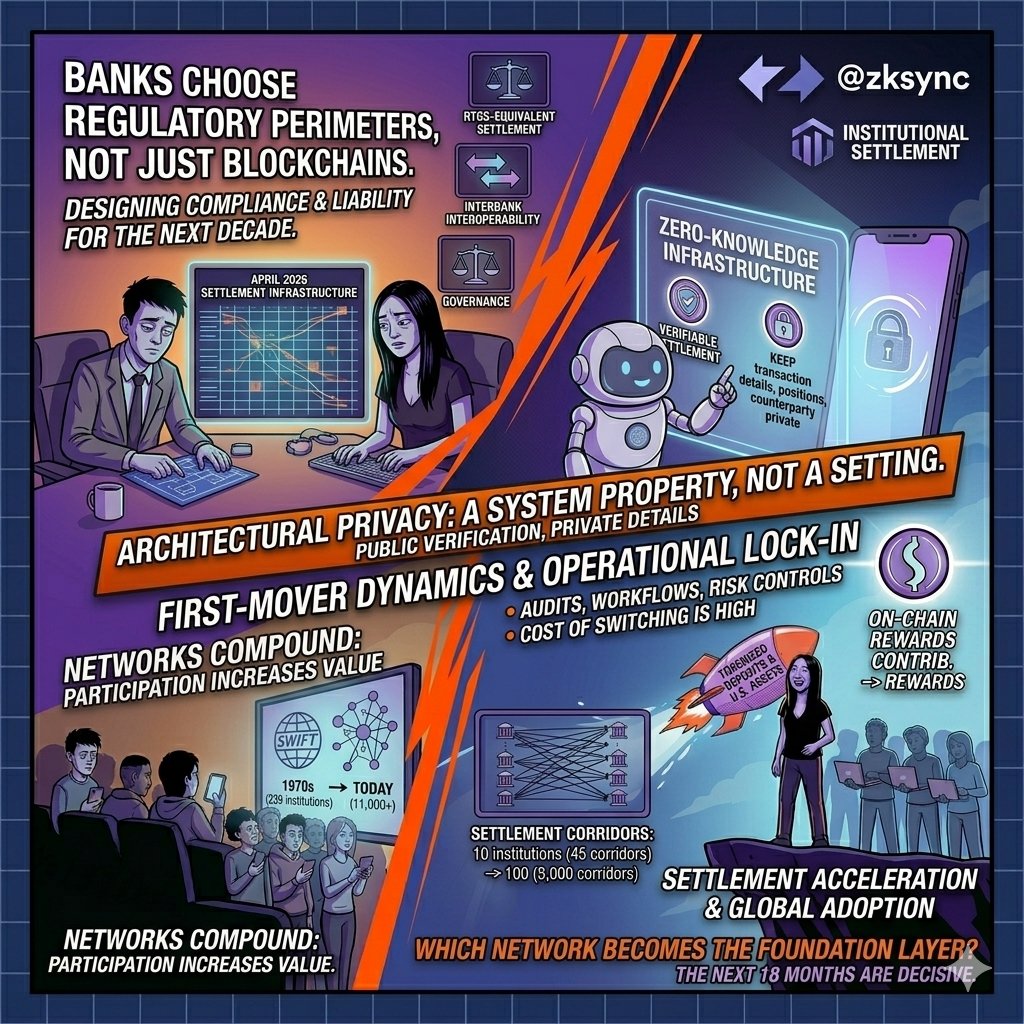 51 35 2.61K 阅读原文 >发布后ZK走势看涨zkSync因其零知识架构在机构结算中具领先优势,未来18个月是关键。